FDA Orphan Drug Designation for OCT-980
The designation covers retinitis pigmentosa, including RHO-adRP, the form of the disease OCT-980 is being developed for.
Read announcement
We engineer human cells to reveal how molecules change disease biology, then build tens of thousands of new molecules to run through those cells every week. With every result, our AI gets better at knowing what to make next.
An oral corrector in development for retinitis pigmentosa.
OCT-980 is an investigational medicine for rhodopsin-associated autosomal dominant retinitis pigmentosa (RHO-adRP). In RHO-adRP, misfolded rhodopsin mislocalizes within rod cells and accumulates to toxic levels. OCT-980 is designed to stabilize misfolded rhodopsin and restore rhodopsin trafficking.
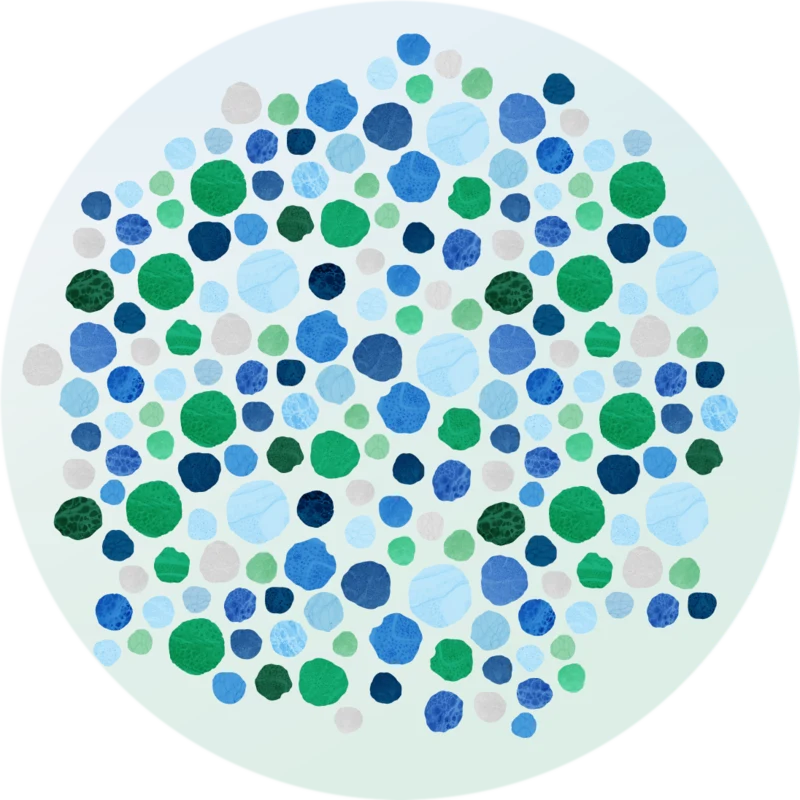
Phase 1b/2 study in patientsView on ClinicalTrials.govNCT07408232Different mutations disrupt the same protein. Each square is one rhodopsin variant, measured in engineered human cells without and with OCT-980. Learn more about deep mutational scans
We make thousands of molecules and test them in living human cells, then use the results to choose the next experiments. The Navigator joins scaled biology, scaled chemistry and focused ML/AI with automation in a weekly discovery cycle.
Scientists and models select related molecules to test specific ideas.
Automated chemistry produces libraries of new compounds at nanoliter scale.
Engineered cells report how each molecule affects disease-relevant mechanisms.
Real-world results update our models and help determine what to make and test next.
Small-molecule medicines for genetic disease, cancer and other serious diseases.
Clinical progress, company milestones and the science behind our medicines.
The designation covers retinitis pigmentosa, including RHO-adRP, the form of the disease OCT-980 is being developed for.
Read announcement$34.8 million across three awards will fund open datasets and AI models for drug absorption, distribution, metabolism, excretion and toxicity.
Read announcementThe patient portion follows a completed Phase 1a in healthy volunteers and evaluates safety and tolerability alongside measures of retinal structure and visual function.
Read announcement
We are scientists, engineers and operators working together to advance medicines. We combine biological insight and technology with the focus and care that clinical development demands.